0%
Warming the wok stations...
Published June 30, 2026 · 3 Min Read
In Cantonese cuisine and Hakka Chinese traditions, 'Wok Hei' is translated literally as 'the breath of the wok'. It represents that elusive, smoky, and slightly charred flavor profile that defines a truly premium stir-fry. Searing food at extreme speeds over a high-output burner creates a beautiful complexity of aromas.
To achieve wok hei, our kitchens use specialized high-pressure burners that project an intense open column of fire. The seasoned cast-iron wok must be preheated until it begins to smoke before any oil is added. This vaporizes trace amounts of organic residue on the surface of the cast iron, coating the wok in a thin protective layer that adds character to the stir-fry.
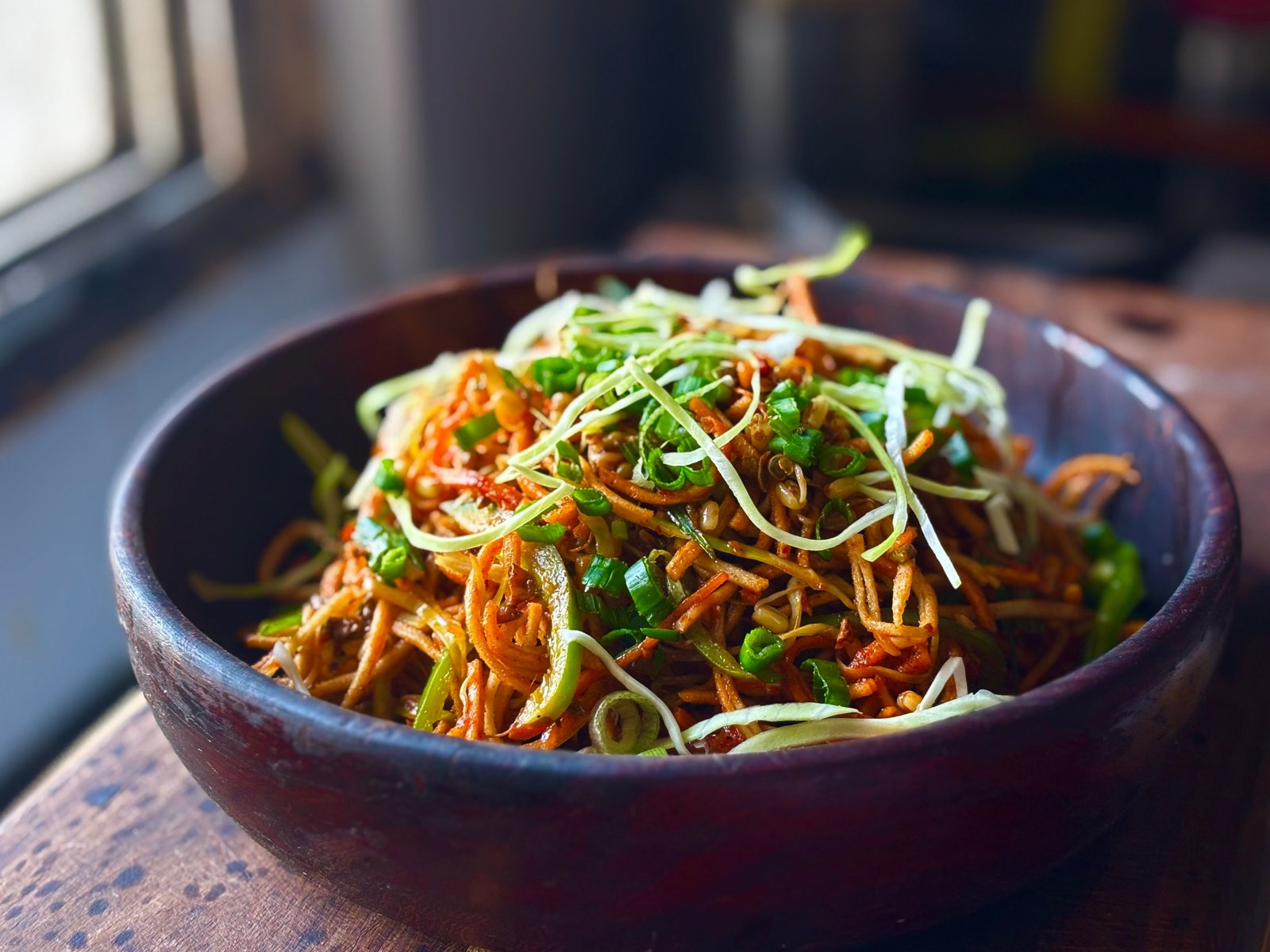 Wok tossed noodles prepared fresh over open flames.
When the chef tosses noodles or rice, droplets of oil are thrown into the hot air circulating directly above the wok. As these oil droplets pass through the rising column of intense heat, they vaporize, creating a microscopic mist of flavored aerosols. Tossing the food back down through this mist infuses it with a deep, caramelized, and smoky glaze. This is why a dish prepared in a premium wok tastes completely different from a home skillet prep.
Vegetables and meats contain moisture. If seared at low temperatures, they steam and become soft. In our woks, the extreme heat cooks and dry-sears the outer layers instantly, keeping vegetables crisp and chicken pieces tender. The sugar, soy sauce, and aromatic ingredients caramelize instantly, creating a complex taste profile that is neither dry nor soggy.